Tattoo Ideas for Men That Still Look Good Once Healed
Summary
The best tattoo ideas for men are chosen by placement and aging, not by subject. Forearm, upper arm, shoulder, chest and calf heal predictably. Traditional, neo-trad and blackwork hold contrast for decades, while fine-line and tiny realism blur. Compass roses, framed animals and dagger-and-snake designs are safe bets; names, thin script and clip-art tribal bands are not. Try the design on your skin first, then brief an artist who can show healed work.
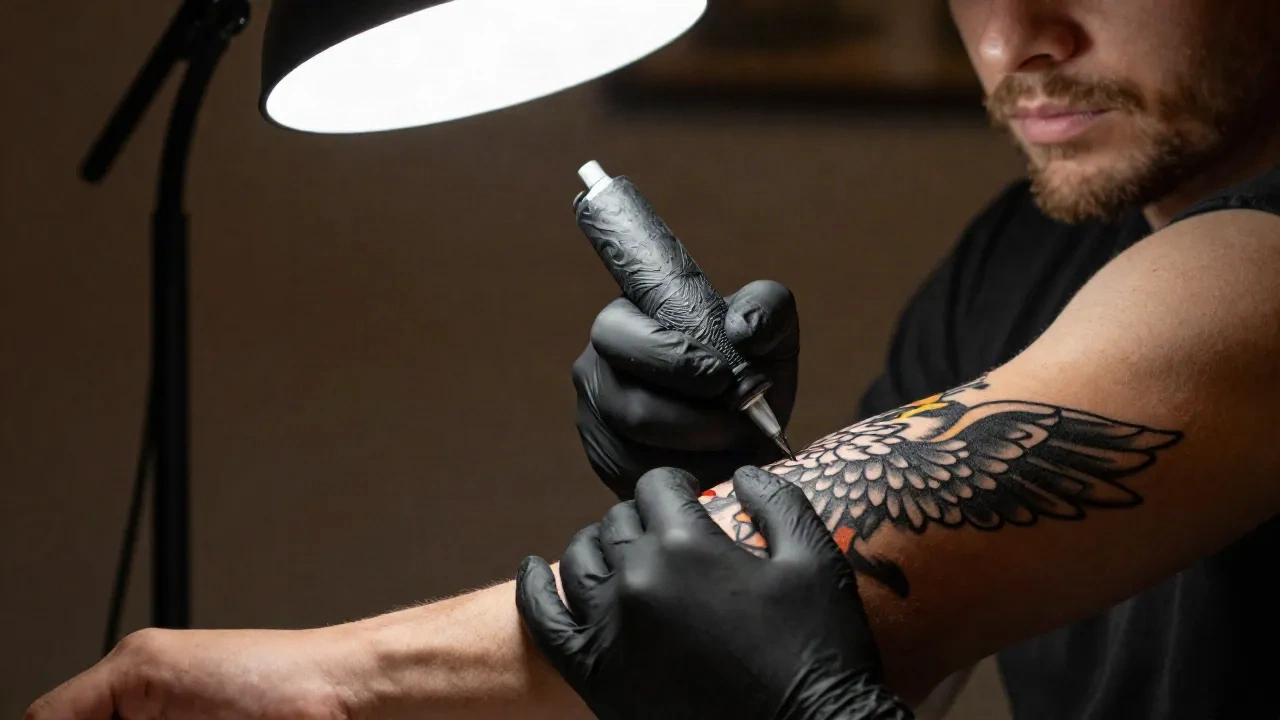
Most tattoo ideas for men fail the same way: the design was picked from a screen, then placed on a body that moves. A compass on the forearm works. A wolf head stretched over the outer thigh does not. So choose the spot and the style together, and only then the subject. Below is how I'd decide, with the ideas that survive healing and the ones I'd skip.
What makes a tattoo idea work on a man's body?
Three things: contrast, room and shape. Contrast means bold lines and solid black or dark grey, because those hold for decades while soft shading and tiny detail blur. Room means the design gets enough skin to breathe. Shape means the outline follows the muscle underneath instead of fighting it.
Men tend to pick the same handful of zones: forearm, upper arm, shoulder, chest, calf. They are popular for a reason. They are flat or gently curved, they heal predictably, and an artist can work on them without contortions. Pew found that 27% of American men have at least one tattoo, against 38% of women. Plenty of first-timers, then, and plenty of artists who have seen every mistake twice.
Here's the short version before the detail. If you want one piece you can show off, go forearm. If you want something you can hide at work, go upper arm or shoulder. If you are thinking sleeve, start with one anchor piece and build outward.
Which placement should you pick first?
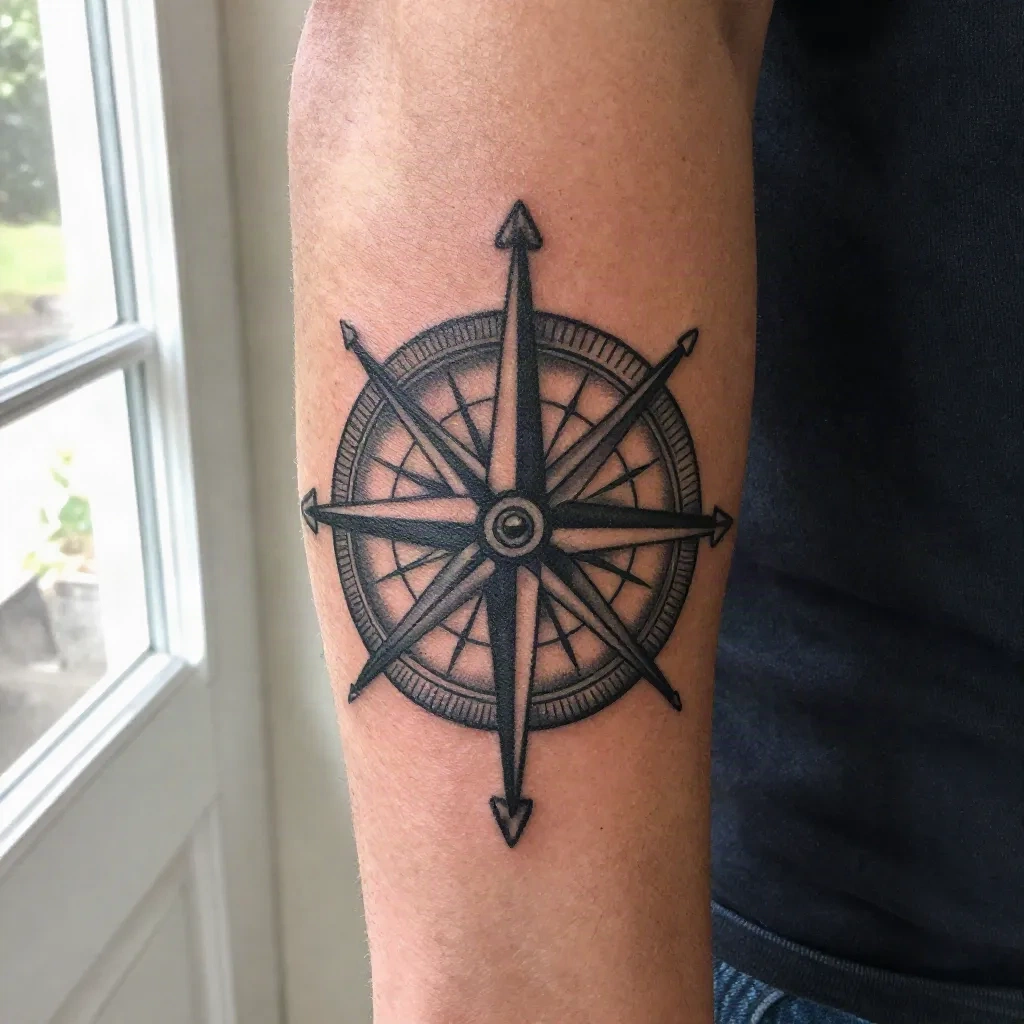
Forearm. The easiest first spot. Mid-level pain, quick sessions, and you can see it every day, which is the point and also the risk. Outer forearm suits vertical designs: daggers, snakes, a column of script. Inner forearm suits rounder pieces like a compass or a clock.
Upper arm and shoulder. The classic. Lots of flat area, easy to cover with a t-shirt, and the best base for a future sleeve. If you are even slightly tempted by a sleeve later, put the first piece here and tell your artist about the plan.
Chest. Great for symmetrical work: wings, a pair of hands, a geometric pattern across the pecs. Heals fine. It hurts more over the sternum and near the collarbone. Plan on breaks.
Calf. Underrated. Big, flat, and nobody bumps it on a door frame. A good home for a portrait or a detailed animal, because the skin holds still.
Ribs, hands, neck. Not for a first tattoo. Ribs hurt and distort with breathing. Hands and fingers blur fast because the skin renews quickly and gets washed fifty times a day. Neck is a career decision as much as a tattoo decision.
Pain scales are guesswork and I don't trust the ones that give you a number out of ten. What's consistent: bony areas and thin skin hurt more, meat hurts less.
Which styles suit men best, and what do they look like in ten years?
Here's where most guides turn into a gallery. Skip the gallery. Look at the aging.
Traditional. Thick outlines, limited palette, flat colour. It is the most forgiving style on earth. Eagle, anchor, dagger, rose, panther. If you want something that still reads at arm's length in 2046, this is it.
Neo-trad. Same bones as traditional, with a richer palette and more detail. Beautiful, but the detail needs size. Shrink a neo-trad panther to the size of a deck of cards and the eyes close up.
Blackwork and dotwork. Solid black and stippled shading. Strong on shoulders, chest and forearm. Large black areas take longer and itch more while healing, but they do not fade to grey mush.
Fine-line. Pretty on day one, risky on year ten. Thin lines spread and lose contrast. If you love it, keep the design simple, go a bit bigger than you think, and pick an artist who does it all day. We wrote more on this in our fine-line breakdown.
Realism. Portraits, animals, a lion that looks like a photograph. Brilliant when it's done by a specialist and expensive for the same reason. Placement matters: skin that stretches (stomach, inner bicep) ruins the likeness.
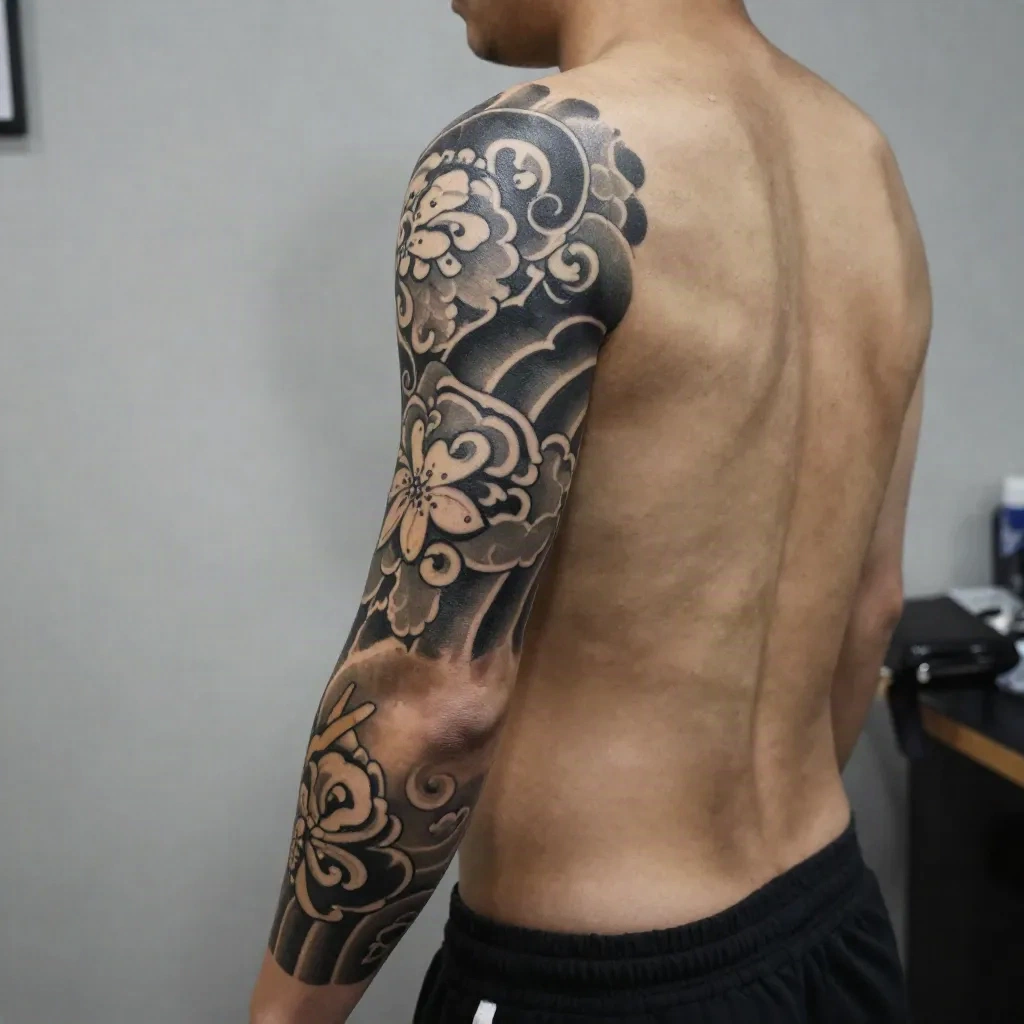
Japanese (irezumi). Dragons, koi, waves, wind bars, big backgrounds. It is a whole system, with rules about flow across the body. Do not order a "Japanese dragon" from an artist who does not do Japanese work.
Which tattoo ideas for men are worth it, and which ones to skip?
Worth it:
Compass or compass rose. Round, symmetrical, readable at any size, and it sits well on the forearm or calf. Concrete tip: ask for a thicker outer ring than feels necessary.
Animal in a frame. A bear, a stag or a raven inside a simple border. The border keeps the shape clean as the lines soften.
Dagger and snake. A vertical design for the outer forearm or calf, and a classic of old-school flash.
Geometric panel on the shoulder. Lines and dots, simple to fix or extend later.
A building, bridge or boat that means something to you. Specific beats symbolic. The harbour you grew up near says more than a generic anchor.
Botanical. Olive, fern, oak. The bad rap is for soft, watery work. Bold botanical in blackwork is excellent.
Skip:
Names on the body. Kids, fine. Partners, think twice. Cover-ups cost far more than the original.
Thin script on the inner forearm. Letters blur first. If you must, go large with a font that has some weight.
Tribal bands pulled from a clip-art site. Most of what gets sold as tribal has nothing to do with any actual tradition. More on that below.
A wolf with moon, because the Pinterest board had one. Not a rule, just a pattern. If everyone has it, ask yourself why you want it.
Tiny, ultra-detailed realism. A photo needs space. Under a palm size it turns into a smudge.
How do you plan a sleeve without regretting it?
Start with the middle, not the whole. A sleeve that was designed on paper in one go usually looks like a sticker book. A sleeve that grew out of one strong anchor piece, with the artist filling space on purpose, looks like a decision.
A sensible order: pick the anchor on the upper arm or shoulder, let it heal fully, then extend down toward the elbow and forearm. Leave breathing space (negative space, skin left open) between motifs so the eye can rest. Keep the same style, or at least the same line weight, throughout.
Sessions add up. A large piece means several long sittings spread over weeks or months, and a half sleeve is usually a few of them. Don't rush the healing gap to hit a holiday date.
What about tribal, Norse, Maori and other symbols with real roots?
This one gets men in trouble, so a few facts instead of a sermon.
Maori moko and Polynesian tatau are not decoration. They record genealogy and status, and the patterns belong to specific people and places. A "Maori-style" sleeve made by someone with no connection to the culture reads as costume to people who know. If the culture is yours, go to an artist from your own community. If it is not, pick a different design language.
Norse imagery (runes, knots, Mjolnir) is popular and has a messier modern story, because some symbols have been picked up by hate groups. Check what your chosen symbol means today, and ask your artist if it has any baggage. A good artist will know.
Japanese yakuza-linked motifs and religious icons (the cross, the Buddha, Hindu deities) need the same care. Explaining isn't forbidding. If you can say in one sentence why you want the symbol and where it comes from, you are probably fine.
How do you try out an idea before it's on your skin?
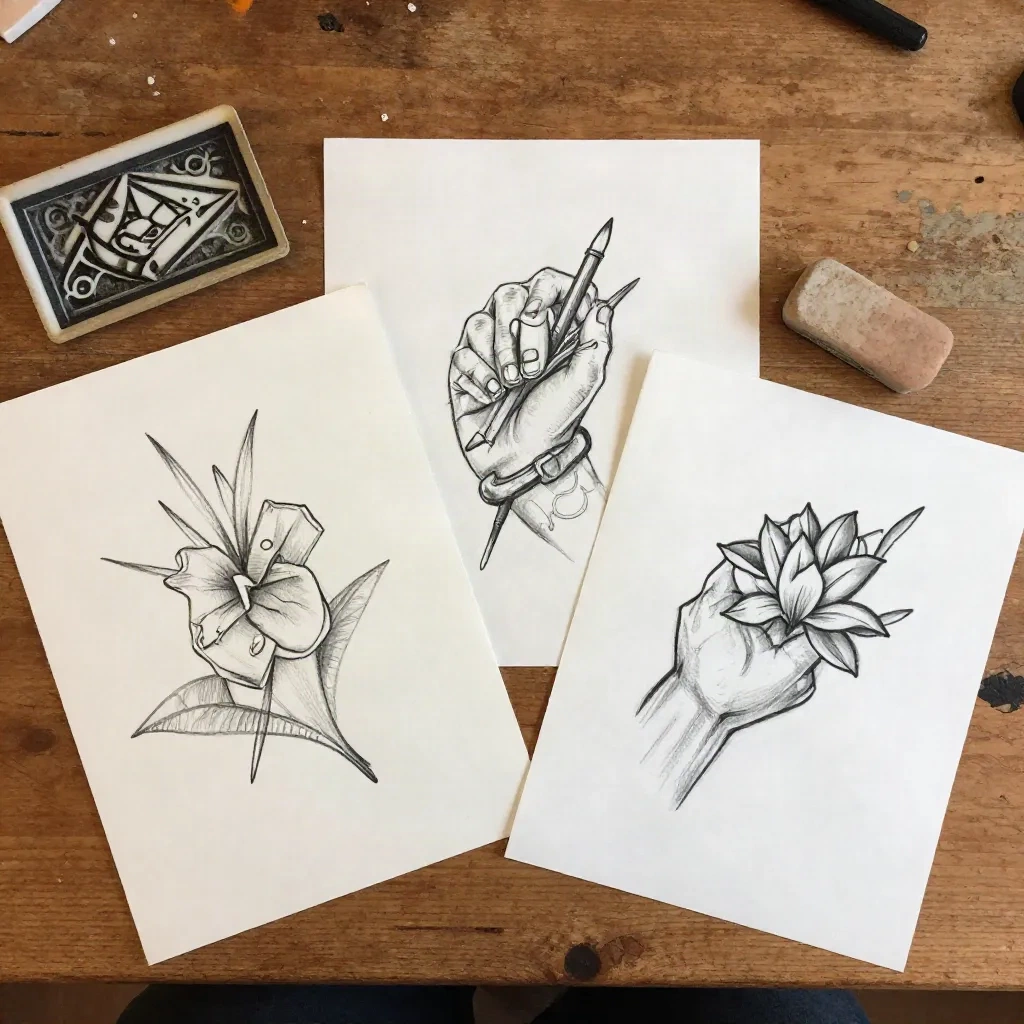
The cheapest mistake is the one you catch on a screen. Print the design at real size, tape it to your arm and wear it for a week. Better: use a photo try-on that places the design on a picture of your own skin.
Inke generates a flash sheet of variants from a prompt, then lets you preview your favourite on your own arm. InkHunter does live camera try-on on iPhone. BlackInk AI covers a large number of styles and has a stencil converter. TattoosAI is a pure design generator, with no placement preview.
The honest limit: these tools give you a direction, not a finished tattoo. You still need a human with a needle to turn the design into something that works on skin, and a good one will redraw it. If your artist can't show you healed photos of similar work, find another.
How do you brief your artist so the idea survives?
Bring three things: two or three reference images that show the feel (not a design to copy), the exact placement on your body, and an honest size. Say what you hate as well as what you like. "No gradients, no soft shading, I want bold" is more useful than a Pinterest folder.
Then listen. If the artist says the design should be bigger, simpler, or moved two inches, that's the job. The ones worth paying are the ones who will say no.
What would I actually get?
If I were choosing today: a traditional or neo-trad piece on the upper arm, big enough to read, bold enough to age, sitting where a future sleeve can grow around it. Compass, dagger, an animal in a frame. Boring? Maybe. Still looking good in 2046? Yes.
Sort the placement, pick the style that ages, try it on your skin, then book the artist who shows you healed work. In that order.