Fine Line Tattoos: What They Are and Why They Fade
Summary
Fine line tattoos use a single needle to trace delicate, precision lines with minimal fill. The aesthetic is striking: botanical, geometric, portrait-style work that looks lifted from a pencil sketch. The reality is that these pieces need maintenance. Lines thinner than 0.5mm fade faster than bold work, especially on high-friction areas. Before you book, here's what the SERP rarely covers: placement decisions, artist vetting, and honest healing expectations.
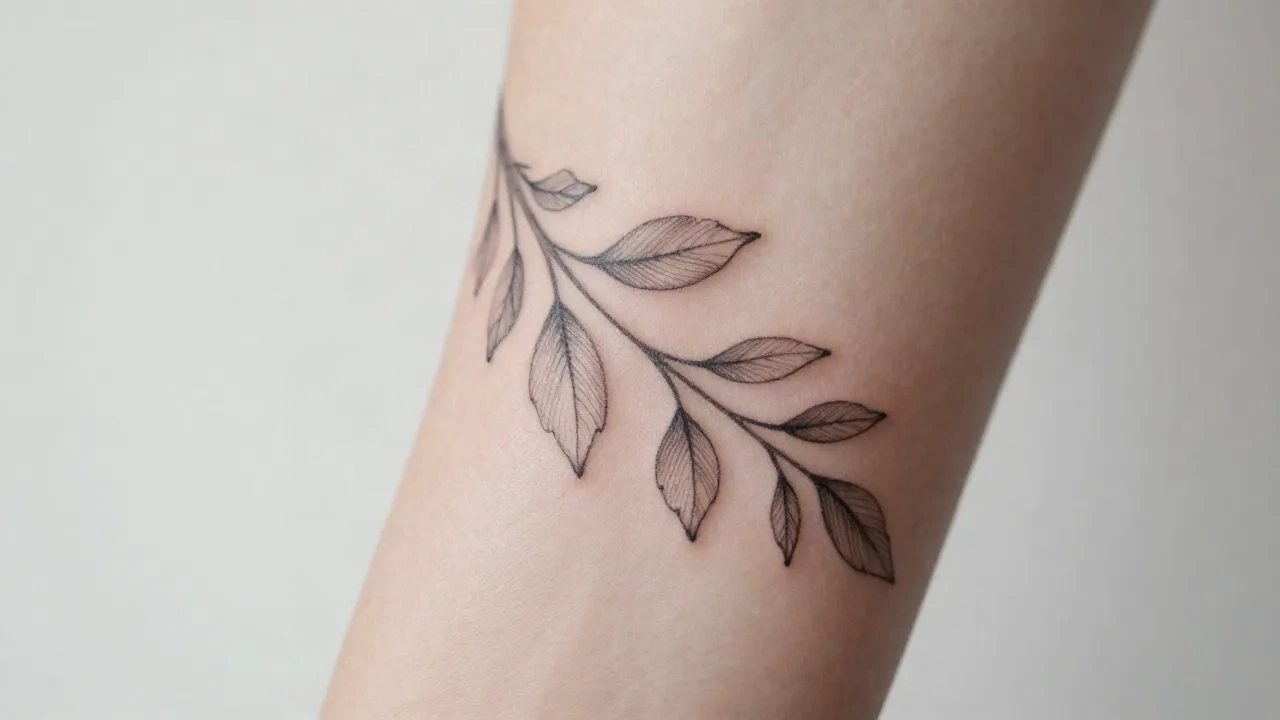
Fine line tattoos are everywhere right now. Delicate botanicals, minimalist geometric linework, portraits that look engraved rather than inked. The style has earned its popularity. It's also earned a reputation for being misunderstood at the booking stage, which is how people end up disappointed at six months.
Before you commit, here's what actually matters about the fine line tattoo style, from the technical basics to the parts most consultations skip.
What makes a tattoo fine line?
The term refers to needle configuration, not just aesthetics. Fine line artists work primarily with a 1RL (one round liner) or 3RL needle, creating lines that can go as thin as 0.2 to 0.3mm. A traditional bold tattoo uses a 5 to 9RL setup, packing significantly more ink per pass into the dermis.
The visual result is something close to a drawing or engraving: clean, precise, architectural. The appeal is obvious. A well-executed fine line piece has a quality that heavier tattooing simply can't replicate. But the mechanical reality is more demanding.
Thinner lines mean less ink volume per millimetre of work. That single fact affects everything downstream: healing speed, longevity, how the piece reads on different skin tones, and what happens if the artist's depth control isn't consistently tight. Fine line tattooing requires a level of technical precision that not every skilled tattoover has developed.
That's not a value judgement. It's a specialisation, the same way a tattoover who excels at Japanese traditional work may not be the right person for a fine line portrait. The style demands its own specific skill set.
Why fine line tattoos fade faster than you expect
This is the part most tattoo content either glosses over or buries under so many qualifications it loses meaning. So, plainly: fine line work fades faster than bold work. That's physics, not a quality problem.
Thinner lines deposit less pigment into the dermis per unit area. The ink they do deposit is more exposed to UV degradation, since there's less of it to absorb and diffuse light. Skin in high-movement areas, like joints, inner arms, and anywhere clothing rubs constantly, compresses and stretches the dermis repeatedly. Over months and years, that mechanical action breaks down thin linework in ways it doesn't affect heavier saturated work.
What does real fading look like? After 12 to 24 months without proper sun protection and a touch-up session, a crisp 0.2mm line can soften into a diffuse 0.5mm shadow. It still reads as a tattoo. It may not read as what you booked.
Most reputable fine line specialists are upfront about this. They'll recommend a touch-up at 12 to 18 months post-healing, once the ink has fully settled and the piece can be properly assessed. That session brings fine lines back to their original clarity. Factor it into your budget when comparing prices. A cheaper initial session that needs a paid touch-up in a year isn't necessarily cheaper overall.
Concrètement: voilà ce que ça change. Fine line is a style with ongoing maintenance built into it. That's fine if you know it going in.
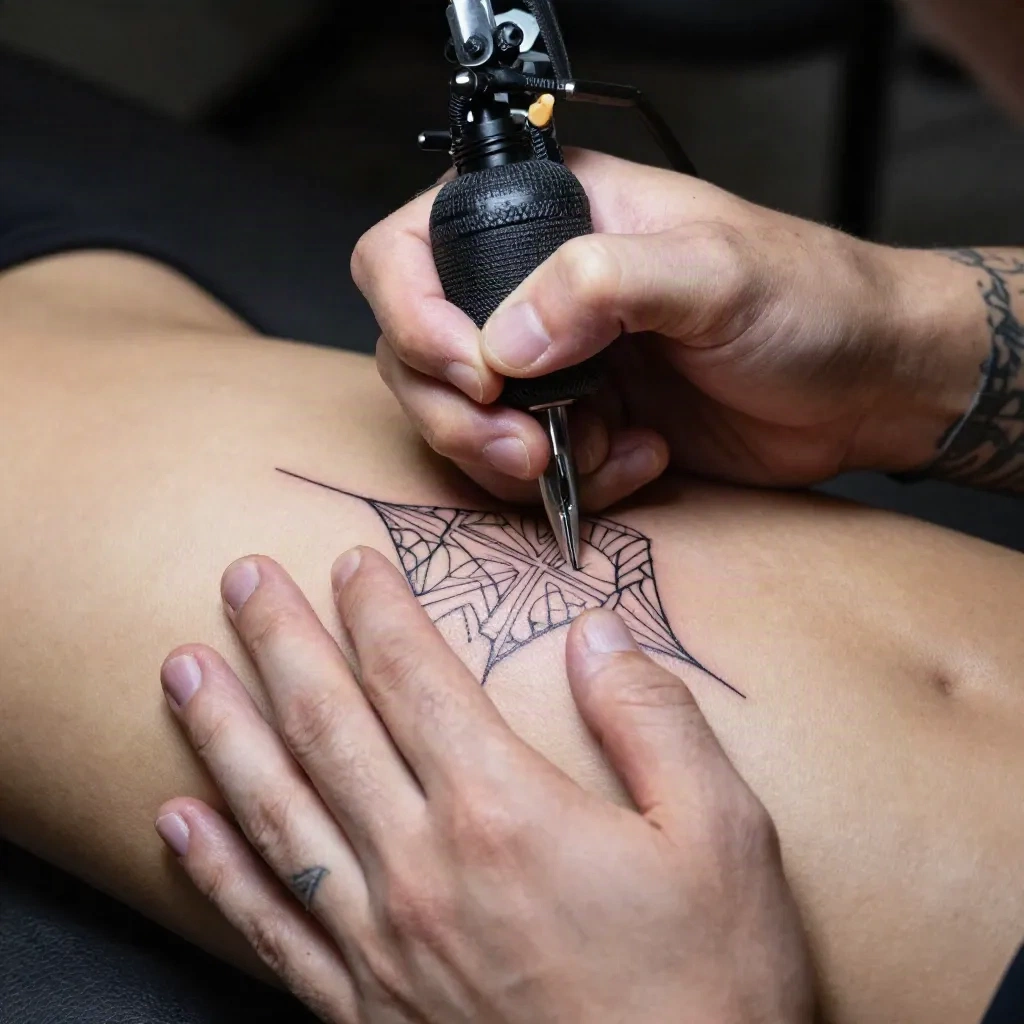
Placement: where fine line works and where it fails
Placement decisions matter more for fine line than for almost any other tattoo style. The same design can hold beautifully on one area and degrade noticeably on another within the same healing window. Here's the honest breakdown.
Placement that works well for fine line:
The outer forearm is one of the best options. Skin here moves relatively little, sun protection is easy with SPF, and the surface heals consistently. The ribcage and sternum are stable and low-friction, though the healing process can be more uncomfortable due to proximity to bone and the movement of breathing. The upper back is another reliable location: stable skin, easy to keep covered from sun, and forgiving during healing. Outer bicep and shoulder also perform well.
For smaller pieces specifically, behind the ear can work for compact, simple fine line designs. Keep the detail level appropriate to the size.
Placement to avoid, or approach with caution:
Fingers and hands are the most commonly cited problem areas. Skin here regenerates aggressively. Fine lines blur and migrate faster than on almost any other body part. Many fine line specialists will either decline hand work or be very direct about what the longevity looks like. Inner wrist has constant friction from clothing, watches, and surfaces. Elbow ditch and inner elbow fold continuously with arm movement. Feet and ankles deal with relentless friction from shoes and socks.
Neck tattoos, though increasingly common, present a specific challenge for fine line: high movement, frequent sun exposure, and humidity from sweat all accelerate fading. Not impossible, but the maintenance commitment is higher.
A tattoover who knows their craft will flag placement risks at consultation. If they don't bring it up, ask directly. How does this placement age? What does this design look like in two years here versus there? If your tatoueur can't answer those questions clearly, find one who can.
How to find a tattoover who actually specializes in fine line
This matters more for fine line than for most other styles. A skilled traditional tattoover and a skilled fine line specialist are doing genuinely different things technically. The needle control required for consistent 0.2mm linework is a specific developed skill, not a general indicator of quality.
Here's what to look for when reviewing a portfolio:
Healed photos. This is the real test, and the one most social media portfolios don't show. Fresh fine line looks clean on every artist's Instagram. Healed work at six months or a year tells you whether the artist understands depth and ink saturation well enough to produce results that last. Ask specifically for healed photos if the portfolio doesn't include them. If the artist can't or won't provide them, that's a signal.
Line consistency. Look at individual lines across a piece, especially on curves and at transitions. Lines that vary in weight unpredictably, or that look scratchy or broken at the ends, suggest depth control problems. The ink is either going in too shallow (fades fast) or too deep (blowouts and blur).
Scale awareness. A fine line piece that reads beautifully at 15cm on a forearm can look muddy and indistinct at 5cm on an ankle. An artist who understands fine line at a technical level will design differently for different scales. If the artist is simply scaling designs down without modifying complexity, that's a problem.
Specialisation indicators. Look at the range of work in the portfolio. An artist who does mostly fine line, or who has a clearly defined style within fine line, tends to be further along the learning curve than one for whom it's a secondary style alongside traditional, neo-trad, and watercolour.
On'a testé, voilà ce qu'on a mesuré: consultation quality correlates directly with how well the artist can discuss healed outcomes in concrete terms. If the artist talks about their work primarily in aesthetic terms without any technical context, that's worth noting.
Visualizing your fine line design before you commit
One thing that's genuinely changed in recent years: you no longer have to arrive at a consultation armed only with a vague description and a folder of saved Instagram posts. AI design tools now let you generate fine line concepts before you've spoken to anyone.
Inke's AI generator handles fine line prompts with reasonable accuracy. You can specify style, whether botanical, geometric, or minimalist portrait work, along with placement area, scale, and line density. The essayage sur photo feature lets you see a rough placement on a photo of your own arm or shoulder before committing to a consultation. The output isn't a finished tattoo design. It's a communication tool.
Arriving at a consultation with two or three generated concepts you respond to changes the dynamic significantly. It narrows the brief, reduces revision rounds, and often reduces time spent in the design phase. That can translate to a lower session cost, depending on how your artist structures their fees.
For broader AI-generated visual exploration before settling on a direction, platforms like OpenArt also offer fine line aesthetic searches across a wide model library.
What the first two weeks actually look like
Healing fine line work is different from healing a bold traditional piece. The process is gentler in some ways and more anxiety-inducing in others, primarily because the milky, hazy appearance at three weeks looks wrong even when it's entirely normal.
Days 1 to 4: Some redness and light swelling around the tattooed area. The piece may look slightly blurred through the plasma layer that forms over fresh work. This is normal and resolves as the initial healing progresses.
Days 4 to 10: Light, flaky peeling begins. For fine line, this should be minimal. Thin, dry flakes, not thick scabbing. Thick scabs on fine line work are a warning sign: they indicate the skin was overworked, and when those scabs lift, they can pull ink with them, creating gaps in the linework. If you're seeing heavy scabbing on a fine line piece, mention it to your artist at your check-in.
Days 10 to 21: The milky or hazy phase. The fresh tattoo looks lighter and slightly washed out as the ink settles into the deeper layers of the dermis. This is the stage where people start to worry. Don't. Don't moisturize excessively trying to bring the colour back. Let the skin do what it does.
Weeks 4 to 8: The true appearance of the piece emerges. This is when you can properly assess line clarity, consistency, and whether the piece needs any touch-up work.
The core aftercare principle for fine line: keep it out of direct sun, especially in the first three months. UV exposure during the early healing window degrades thin linework faster than almost anything else. SPF on healed tattoos as part of your regular routine isn't optional if you want the piece to hold its clarity.
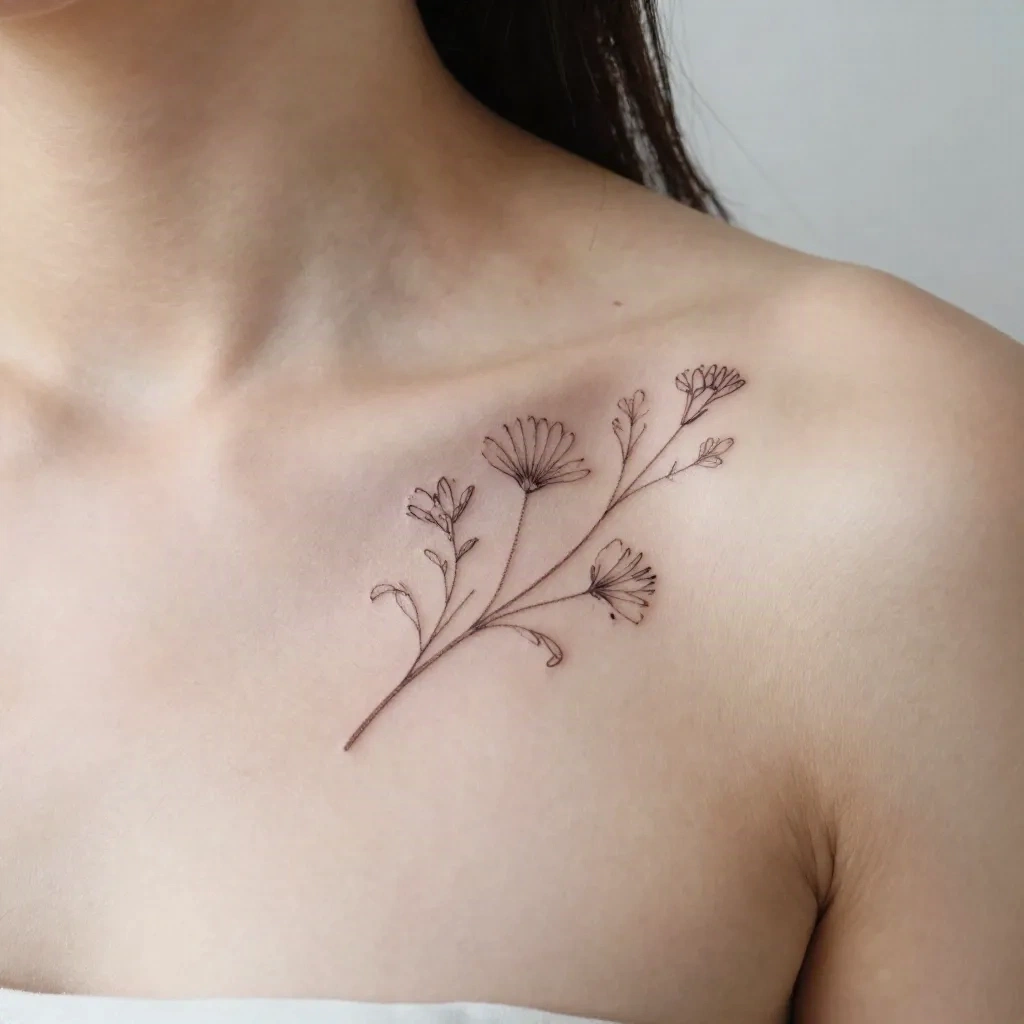
Is fine line the right style for you?
Honestly, it depends on a few things beyond aesthetic preference.
Skin type and tone. Fine line reads best where there's strong contrast between the ink and the skin. On very dark skin tones, thin black lines can lose legibility after healing, particularly on areas where the skin has natural variation in pigmentation. That's not a reason to avoid fine line, but it is a reason to have an explicit conversation with your artist and to look carefully at their portfolio on similar skin tones. A tattoover who hasn't worked extensively with dark skin and fine line technique together may not be the right choice here.
Your lifestyle. If you work outdoors regularly, swim frequently, or can't realistically commit to SPF on your tattoos through the seasons, fine line will show its age faster than a bolder style. That's not a problem if you know it going in and accept the trade-off. It's frustrating if nobody told you.
Your budget for the long term. Fine line isn't inherently more expensive at the initial session. But when you factor in a touch-up at 12 to 18 months, and potentially again at four or five years if you want to keep the piece at its sharpest, the multi-year cost is higher than a bold tattoo that ages predictably with minimal intervention.
Skip fine line if: you're not ready for the maintenance commitment, you're placing it on a high-friction or high-movement area, or you haven't found an artist with documented healed work in this style.
Worth it if: you want clean, precise, drawing-like work, you're placing it on a stable body area, you've found an artist who can show you what their work looks like healed, and you understand that maintenance is part of the deal.
T'as besoin d'un humain avec une aiguille pour finir le travail. The AI reference image gets you to the consultation with a clear brief. The tattoover's depth control and hand precision determine whether the piece still looks sharp in two years.