Tattoo AI that shows it on your skin
Describe your idea once. Get a sheet of flash variants and a try-on on your own skin, then walk into the studio with a design you have actually looked at.
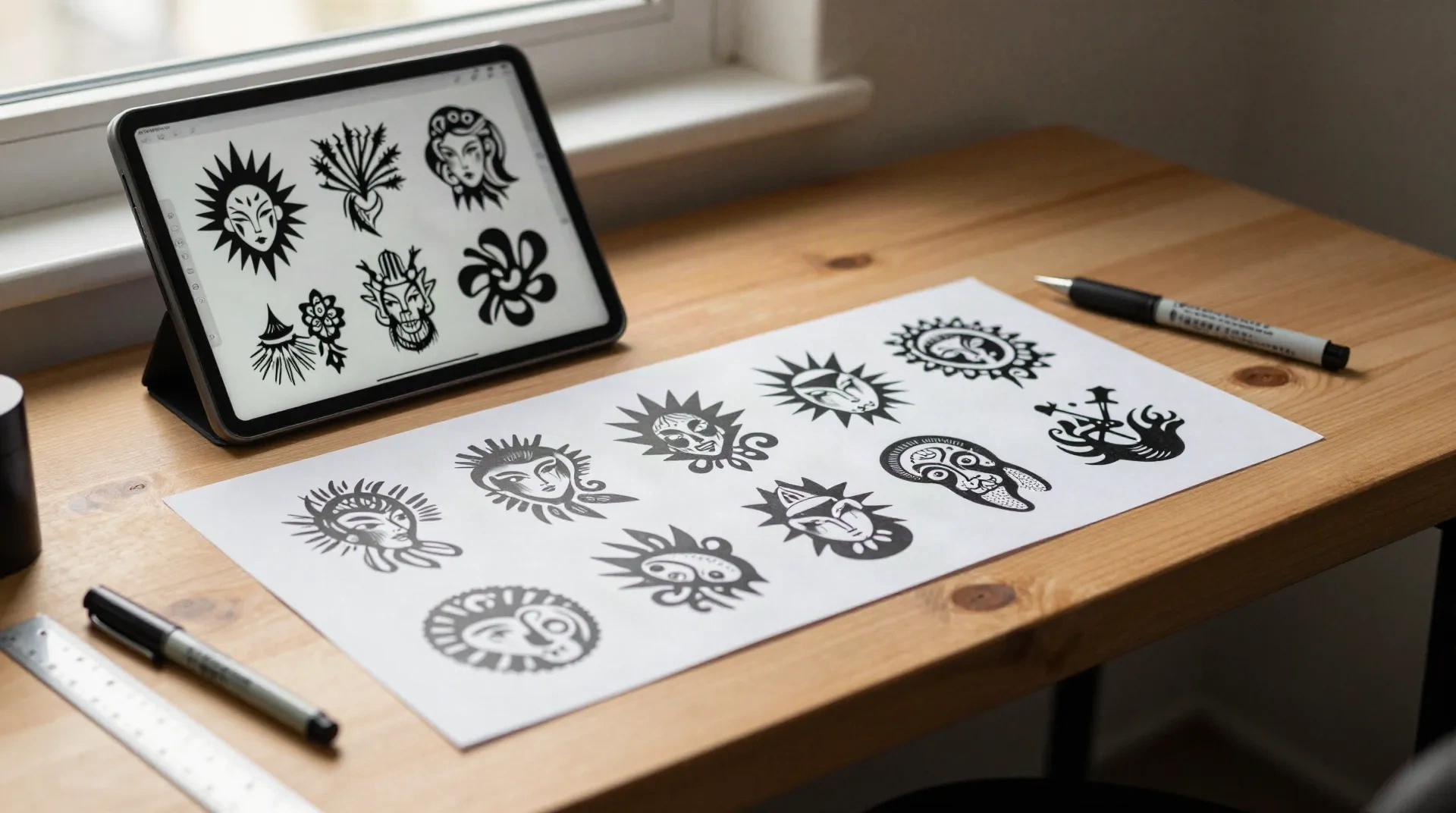
The numbers behind a single Inke idea
Four things a tattoo AI should do
A full flash sheet, not one image
Most image generators hand you one picture and a shrug. Inke returns twelve takes on your idea so you can compare, mix two of them, or throw the lot out.
A try-on on your own skin
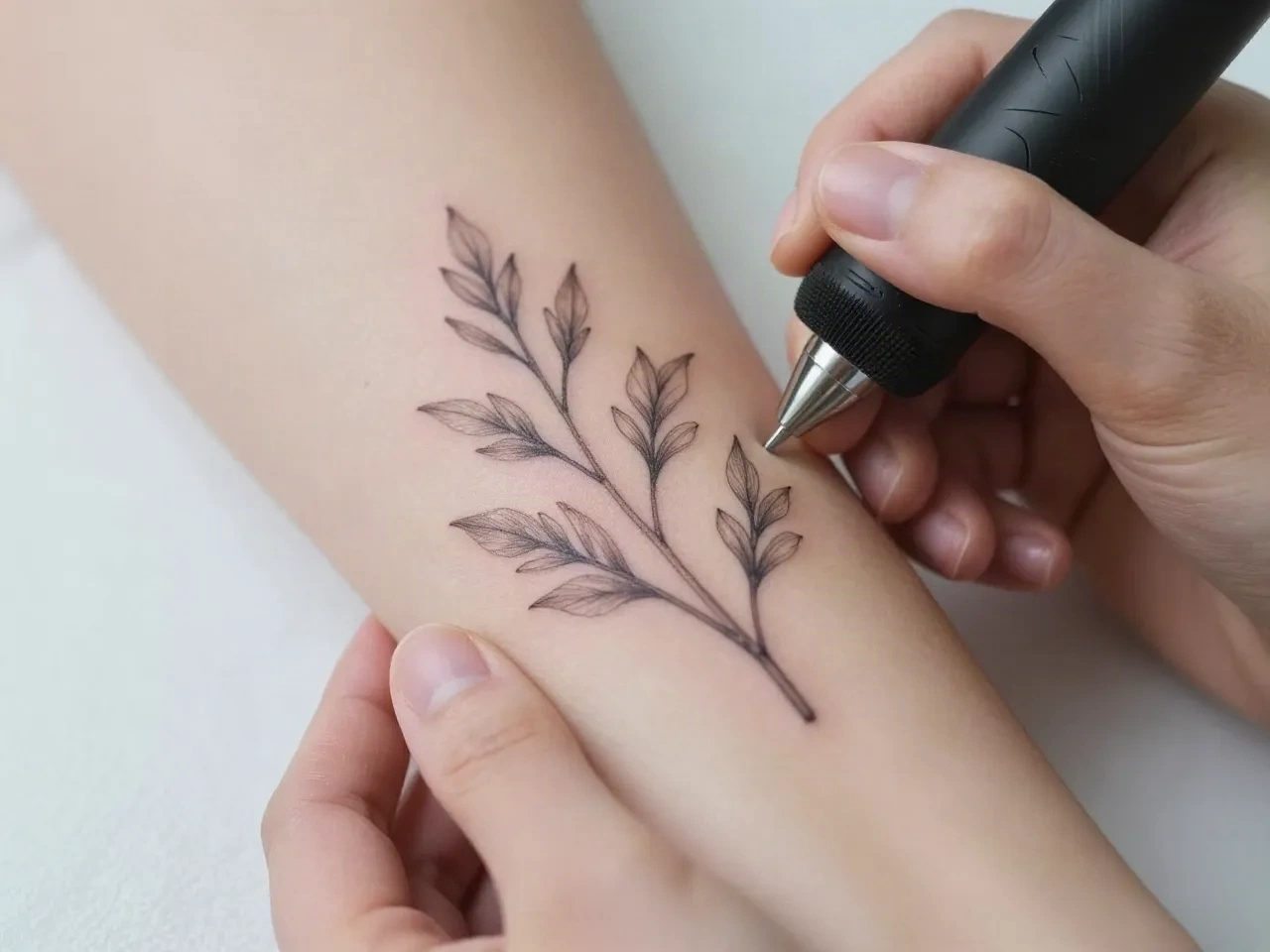
Upload one photo of the forearm, calf or ribs you have in mind. The design lands on it, so you judge scale and flow before anyone picks up a needle.
Trained on real flash
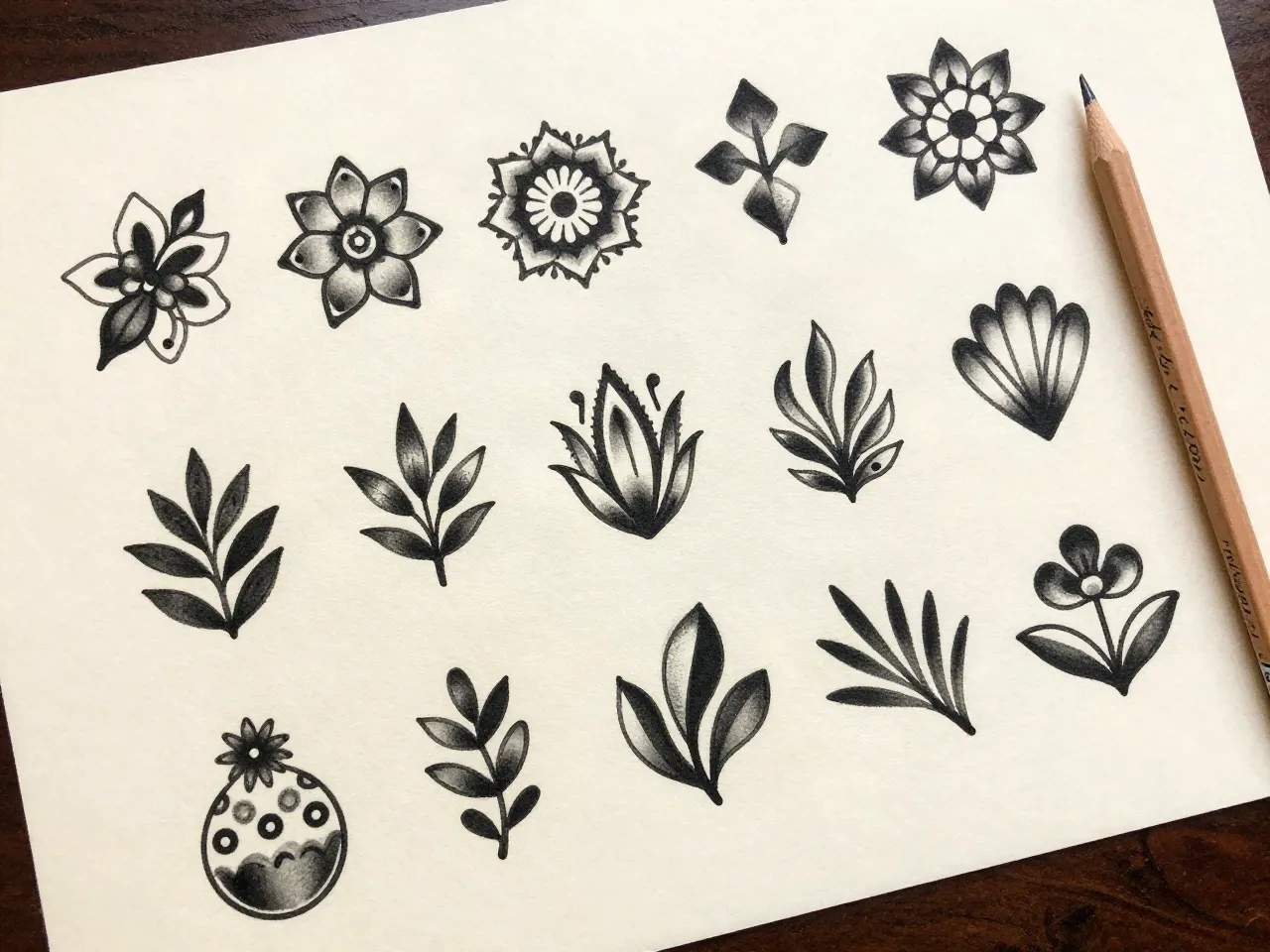
The model learns from flash sheets drawn by a working tattooer in Antwerp, not from random stock art. The linework reads like something a shop would pin on the wall.
Photos that disappear
Skin photos are wiped within two hours. Nothing is stored, nothing trains the model. Your arm is your business.
From vague idea to artist-ready brief
Four steps, about as long as a coffee. The last one still belongs to a human with a needle.
-
1
Describe the idea
Write a few lines: the subject, the style, where it goes. A loose brief is fine. "Small botanical piece for the inner wrist" works.
-
2
Pick from the sheet
Inke returns a sheet of variants. Keep the one that feels right, or note what you like in two of them and run it again.
-
3
Try it on your skin
Upload a photo of the spot. Check size, placement and how thin or bold lines sit on your anatomy.
-
4
Take it to a tattooer
Export the design and show your artist. They redraw it for your body and the needle. That part is their craft, and it should be.
Not sure about the style? Test it first
Fine-line looks delicate on a screen and can blur on skin within a few years. Bold neo-trad outlines hold up but may feel heavy on a thin wrist. Run the same idea through both styles and compare them on your own forearm. Most second thoughts show up at this stage, and a try-on is a cheap place to have them.
- Same idea, several styles, side by side
- See scale on your real anatomy
- Walk into the consultation with questions that matter
A head start on every client consultation
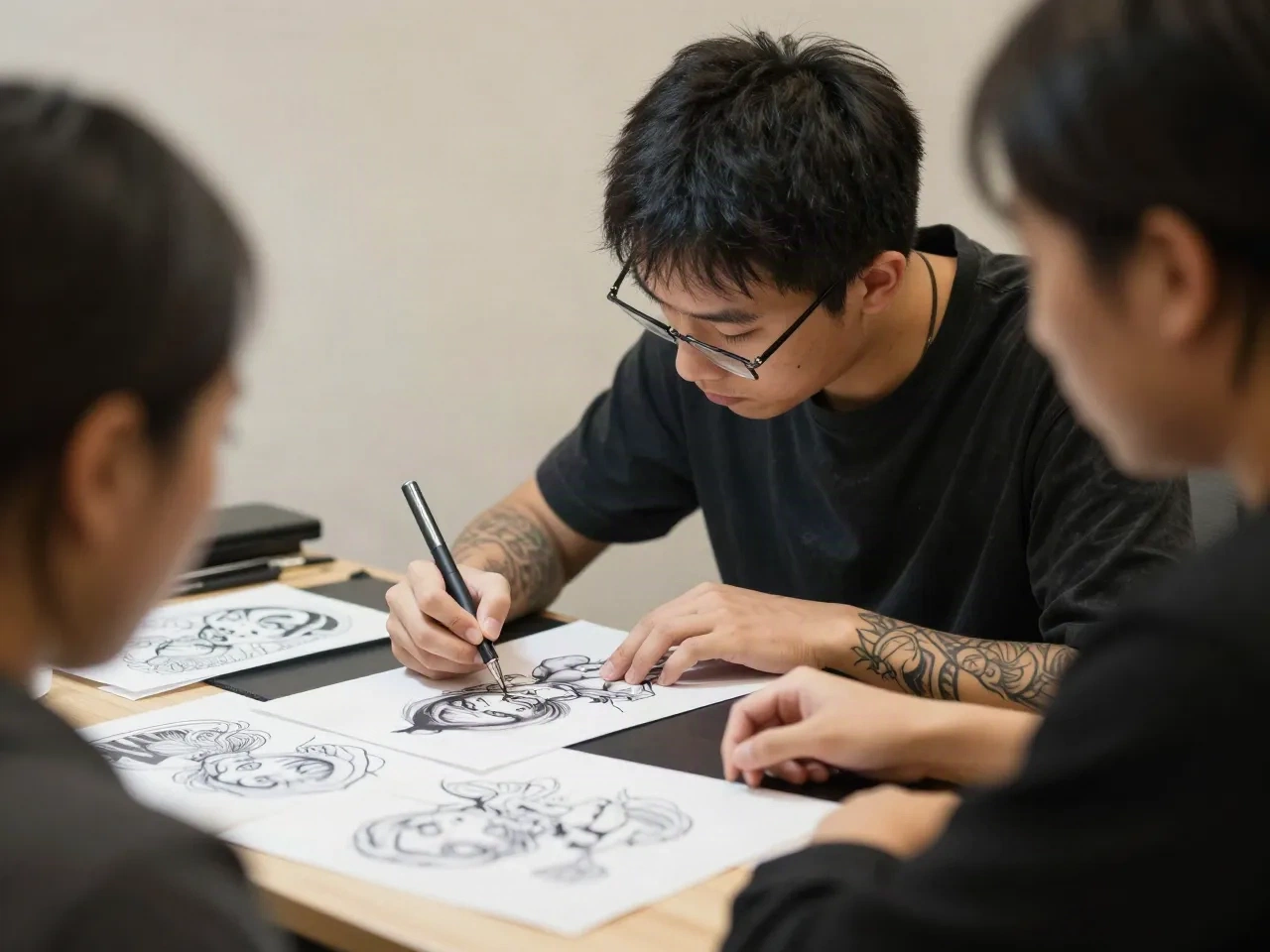
Drawing a flash sheet from scratch takes an afternoon. Inke gives a full sheet to react to in one pass, so you spend your time choosing and refining instead of staring at a blank page. Shops use the Parlour plan to prepare client ideas before the appointment: clients arrive with a design they have already seen on their skin, and the session goes to adjusting, not guessing. The tool does not draw your style for you. It speeds up the first draft.
- 40 client ideas per month on Parlour
- Team seats for the whole shop
- Artist-ready PDF pack for each idea
What tattoo AI cannot do
A try-on is a preview, not a promise. It cannot tell you how the healed tattoo will look in five years, how your skin takes ink, or whether a design survives on a joint. Only a tattooer with healed work to show can answer that. Use the tool to decide what you want, then let a human decide how to ink it. If an AI tattoo tool claims it replaces the artist, close the tab.
- Previews size and placement, not healing
- Designs are references, not final stencils
- Culturally loaded symbols need context first
Inke vs a generic image generator
A general-purpose generator can make a tattoo-looking picture. Here is what changes when the tool is built for tattoo work.
| What matters | Generic image generator | Inke |
|---|---|---|
| Output | One image per prompt | Sheet of 12 flash variants |
| Try-on on your skin | Not part of the tool | Included from one photo |
| Training material | General images | Flash sheets drawn by a working tattooer |
| Skin photo handling | Depends on the tool | Wiped within two hours |
| Pricing model | Subscription or credits | One-time packs, plus Parlour monthly |
Pay once, or monthly for a shop
Two one-time packs for you, one monthly plan for shops. Prices in euros.
Single
One idea, tested properly
- 1 tattoo idea
- 12 flash variants
- 3 try-ons on your skin
- 7-day private link
Session
For a bigger project
- Up to 5 ideas
- 60 variants across styles
- Unlimited try-ons
- 30-day private link
- Export kit for your artist
Parlour
For tattoo shops
- 40 client ideas per month
- Team seats
- Artist-ready PDF pack
Tattoo AI questions, answered
What is tattoo AI?
Can I get an AI tattoo design tattooed as is?
Does tattoo AI replace a tattoo artist?
Which tattoo styles does Inke cover?
What happens to the photo of my skin?
How much does it cost?
Is there a mobile app?
Try your idea on your skin
Start with a single idea for €9. Walk into your consultation knowing what you want, then let your tattooer take it from there.