Tattoo Ideas for Women: 10 Designs That Still Look Good
Summary
The best tattoo ideas for women are designs that stay readable as skin ages, fit the body part, and mean something to you. This guide covers ten ideas from small fine-line florals to neo-trad animals, where each one works, which symbols need cultural care, and how to test a design with print-outs or an AI try-on before booking an artist.
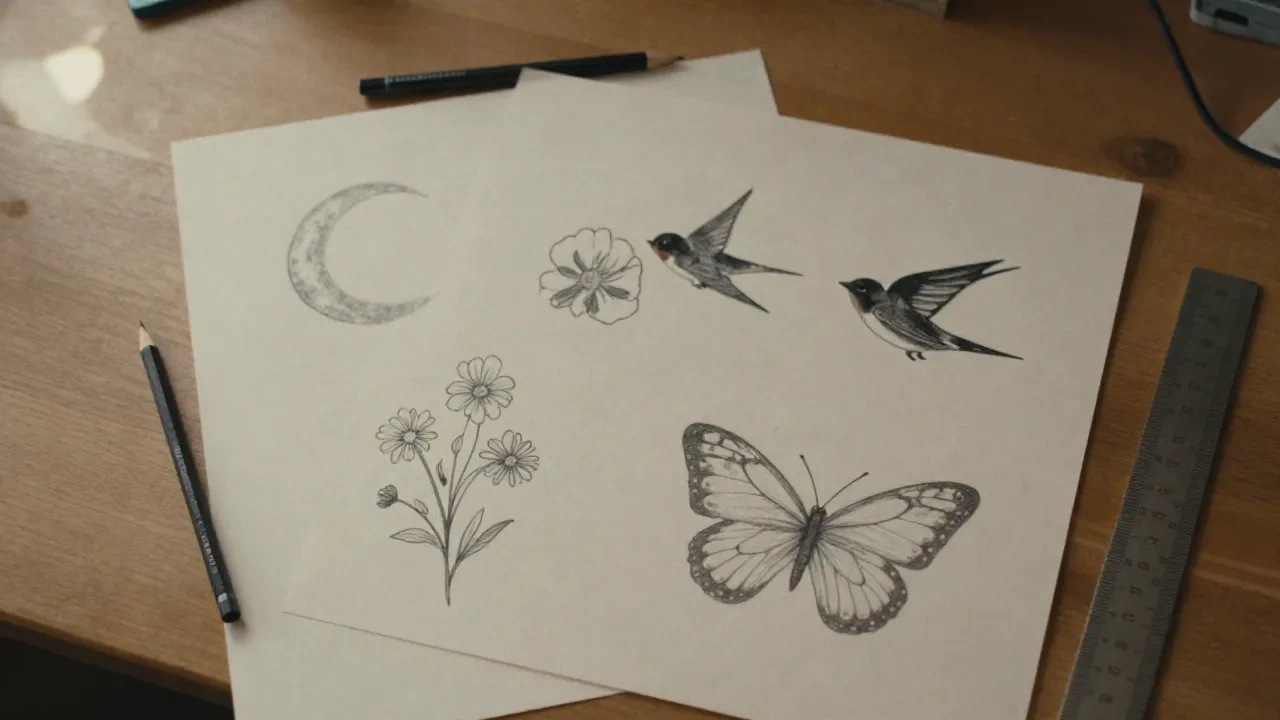
The best tattoo ideas for women are not the ones with the most Pinterest saves. They are the ones that still read clearly in ten years, sit on a spot you can live with, and mean something to you beyond "it looked cute." Below: ten designs worth considering, where they work on the body, what ages badly, and how to test an idea before an artist puts a needle near you.
I'm Ramona. I have 14 tattoos, and two of them I would plan differently today. That is the angle here: the client side of the chair.
Tattoos are no longer a fringe move. Pew Research's 2023 survey found that 38% of American women have at least one tattoo, against 27% of men. The same survey found that 24% of tattooed adults regret at least one of theirs.
Read those two numbers together. Plenty of us are getting tattooed, and a lot of us are guessing at the idea. That gap is where bad tattoos come from. That is where it gets stuck: not at the shop, but in the six months of vague scrolling before it.
What makes a tattoo idea actually work on skin?
Three things, in this order.
Line weight. Fine lines look elegant on day one and soften over the years. A line that is too thin for its size blurs. Ask your tattooer what they would do at your design's scale.
Space between details. Skin spreads ink a little over time. Two petals drawn a hair apart can merge into one blob. Give details room.
Placement logic. A design should follow the body part. A long stem runs along a forearm. A round shape sits on a shoulder blade. A tiny symbol can go almost anywhere.
Meaning comes fourth. I know that sounds backwards. But a meaningful design that is technically unreadable is a meaningful smudge.
Which small tattoo ideas for women are worth it?
Small is the most searched category, and it is also the easiest one to get wrong. These five hold up when they are drawn with a little breathing room.
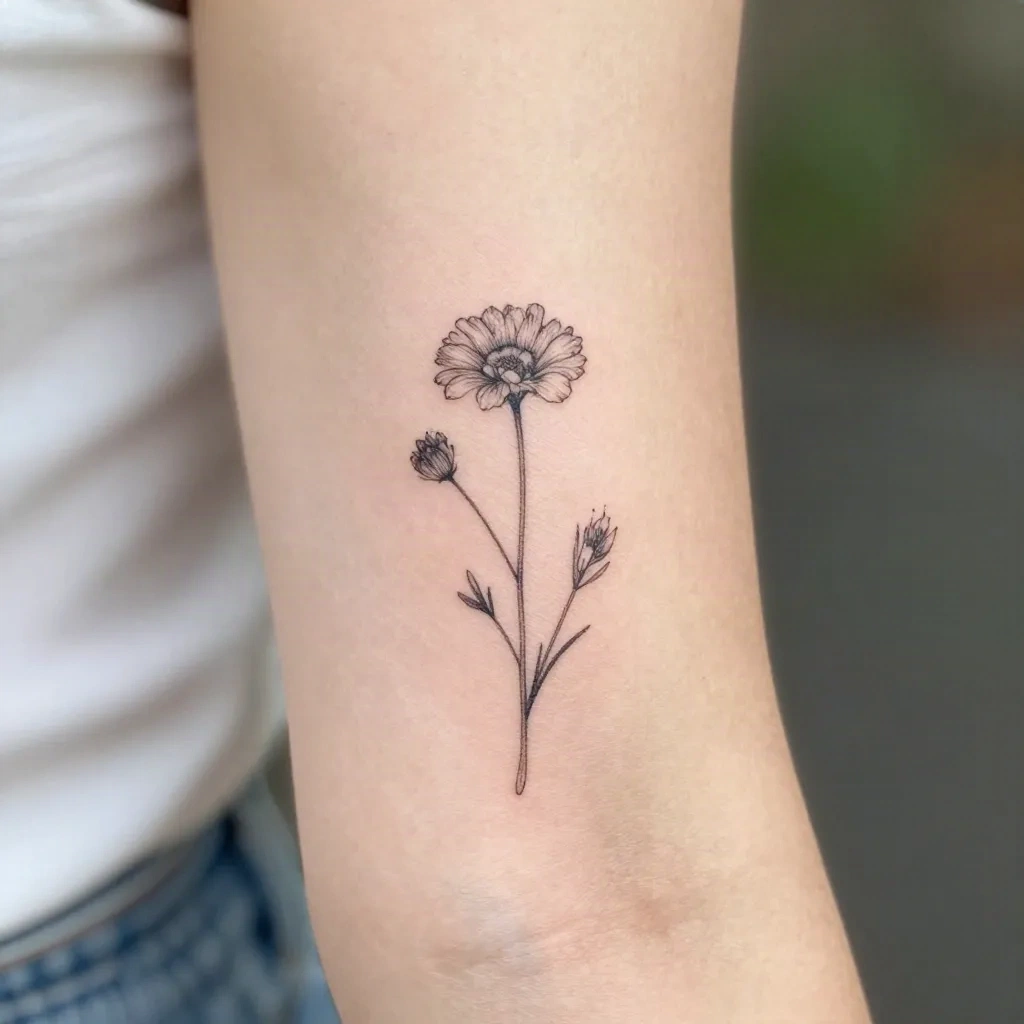
A single wildflower stem. The vertical shape suits a forearm, the back of the arm or the side of the calf. Pick a flower you can name. A birth month flower is a classic for a reason, you can explain it in one sentence.
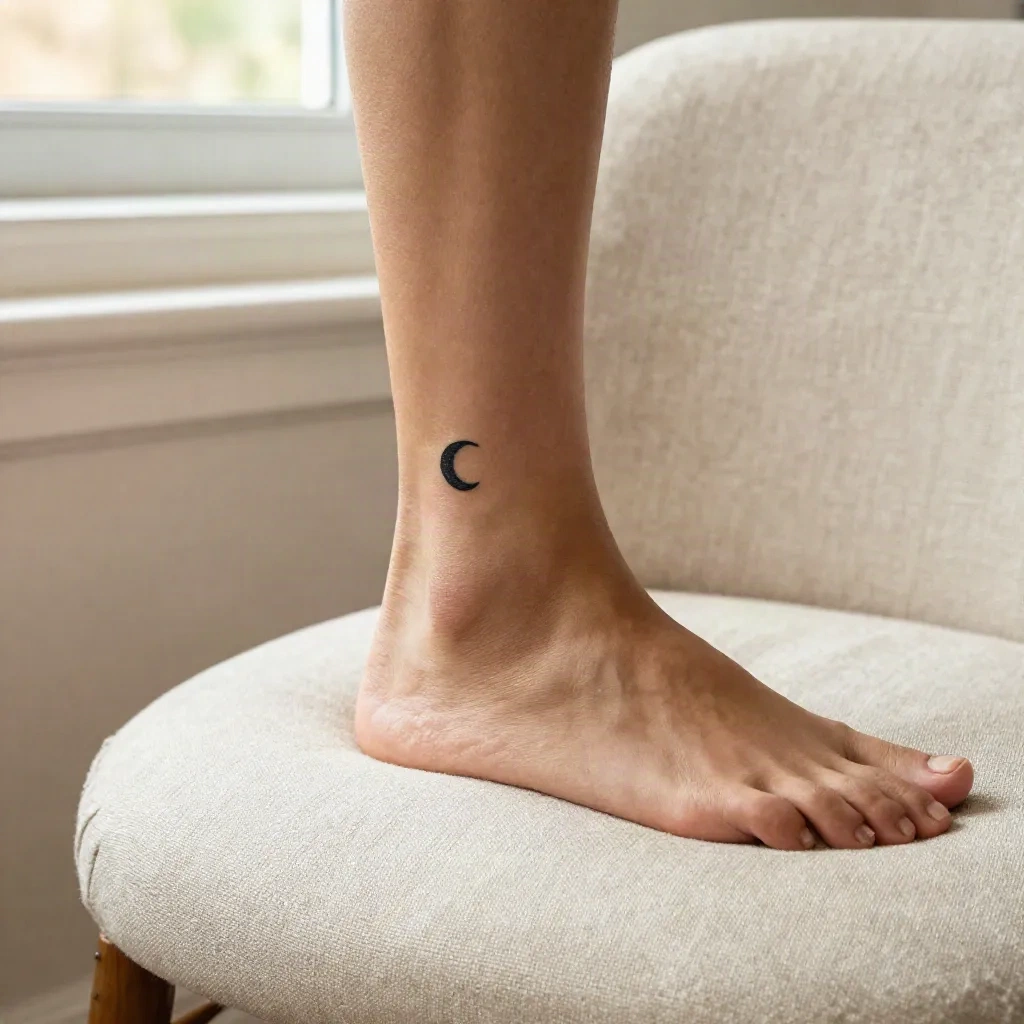
A crescent moon. Simple silhouette, forgiving at small sizes. Works behind the ear, on an ankle or along a collarbone. Skip it if you want something nobody else has: it is everywhere.
A swallow. An old sailor symbol for coming home. It looks good in pairs, one slightly larger than the other. Skip it if the flying direction matters to you and your artist doesn't ask.
A tiny script word or date. Hand-drawn by the tattooer, not typed. Typewriter fonts at small sizes are where the regrets pile up. Keep it short, and keep it readable at arm's length.
A minimal line figure. A mountain line, a wave, a horizon. Three strokes, no shading. These are the safest choice for a first tattoo because there is nothing to blur.
Worth the splurge if you are choosing between two artists: pay more for the one who draws the design for you rather than copying a reference. A custom small tattoo costs more than a flash one. It also looks like it was made for your body.
What about medium and large ideas?
A medium piece starts to make sense around the size of your palm. That is where botanical compositions, animals and illustrative scenes get room to breathe.
Botanical branches and bouquets. A branch that wraps a forearm or climbs a ribcage. You can build it in sessions, adding a stem at a time. This is the most forgiving large idea because it grows in pieces.
A butterfly or moth. Symmetry is the whole trick. Symmetric wings placed on a curved surface can look lopsided if the stencil is not placed carefully. Ask to see the stencil on your body, and stand up straight when you check it.
Neo-trad animals. Bold outlines, flat color, strong contrast. Neo-trad (the modern take on traditional tattooing) holds up well because the thick lines stay readable. Skip it if you love delicate shading, because it is not that style.
Blackwork florals. Solid black shapes with negative space. They age well and cover older work well. They also commit you: black is hard to lighten later.
A spine or shoulder blade piece. The most flattering large placement for composition. Also a big time investment on the chair, so plan the day.
Skip anything that needs very fine detail at large scale, such as a portrait of a pet in microscopic lines. Detail needs size. Size needs a good artist.
Where should you put your first tattoo?
Pick the spot for how you live, not for how it looks in a mirror selfie.
Inner forearm: easy to see, easy to heal, easy to show off. It is also visible to your boss. Decide that before booking.
Outer upper arm or shoulder: flexible. Hidden in a shirt, visible in a tank top. A good first-tattoo spot.
Ribcage: beautiful for long, flowing designs. Pain tolerance matters here, because many people find the ribs rough. Plan breaks.
Ankle and calf: easy to hide in shoes and pants. The ankle bone makes small designs trickier for the artist, so go slightly bigger than you think.
Fingers and hands: the hardest on ink. Daily hand-washing and friction make fingers fade and blur faster than most spots. If you want one anyway, accept touch-ups.
Behind the ear and neck: thin skin, lots of movement, very visible. Think hard about hair and work.
If you are comparing placements, go to your tattooer with two options, not one. A good artist will tell you which one the design prefers.
Do symbols like lotus, mandala or tribal patterns need extra care?
Yes, a little. Some of the most popular tattoo ideas for women borrow from living cultures.
The lotus carries a long history in Buddhist and Hindu traditions, where it often stands for purity rising from mud. Mandalas come from the same region and have real ritual roots. Polynesian and Maori-style patterns (tatau, ta moko) are tied to genealogy and identity: in Maori tradition a moko can encode a person's lineage, which is why a copied design can read as hollow or disrespectful. Japanese irezumi has its own deep rules about composition and placement.
None of this means you cannot get one. It means you should know what you are wearing, and ideally have it drawn by someone who works in that tradition. Ask the artist where the design comes from. If the answer is "I found it online," keep looking.
Can AI help you find a tattoo idea?
It can. It cannot do the tattooing, and it does not replace a conversation with the person who will.
The real use of AI here is the testing phase. You have a vague idea, such as "a moon and some flowers, but small." An AI tool turns that into a handful of visual variants in a few seconds, so you can see what you actually like. The better ones then let you preview the design on a photo of your own body, so you can check placement before you book.
Here is how the tools I have looked at compare, without the hype.
inke generates a full flash sheet of variants and a try-on on your own skin from one photo. It is trained on real flash sheets drawn by a working tattooer in Antwerp, not generic stock art, and uploaded skin photos are wiped within two hours. The catch: it is credit packs (9 EUR for one idea with 12 variants), not a free tier, and it runs in the browser only.
InkHunter is the long-running augmented reality option. Point your phone at your arm and the design tracks live as you move. Good for placement decisions. It is iPhone and iPad only, and watch out for the weekly subscription prompts.
BlackInk AI has the widest style list (28), plus a stencil converter and a cover-up tool. The free tier is limited to three credits and a single placement preview, so serious use means the Pro plan.
TattoosAI is the cheaper way in, at $4.99 a month billed yearly. It is a reasonable pick if you just want to browse ideas and do not need the heavy placement tools.
My rule: use any of these to learn what you like, then hand the result to a human. You need a human with a needle to finish the job. A generated image is a brief, not a stencil. A good tattooer will redraw it for your anatomy, and if yours will not, find another one.
How do you test an idea before you commit?
This is the process I wish I had followed for my first two tattoos.
Wait 90 days. Save ideas in one folder. If one still excites you after three months, it is a real candidate. If three of them look like the same idea, you have found your taste.
Print it at real size. Cut it out, tape it where it would go, and live with it for a week. Wear the shirts you wear. Notice if you keep covering it.
Check the healed work. Ask the artist for photos of tattoos healed for at least a year, in the same style. Fresh photos on social media only show you the best week.
Bring references, not a copy. Show three images that share a feel, and let the artist draw something new. Copying another person's tattoo line for line is a fast way to a flat result.
Say your budget out loud. A good artist will tell you honestly if the idea needs a bigger size or a second session.
The regret stories I hear in my own community usually share one thing: the design was chosen fast and placed fast. Slow is cheap here.
What would I actually book today?
If you are choosing a first tattoo: a fine-line botanical on the outer upper arm, drawn at least palm-width small, with a stem that follows the arm. It is easy to heal, easy to hide, and forgiving if your taste shifts. It also leaves room to add a second stem later.
If you want something bolder: a neo-trad animal on the thigh, with thick outlines and flat color. It will look good in fifteen years because the lines are built to last.
If you are still unsure, that is fine. Run your ideas through a try-on, print them, tape them up, and sleep on it. The right idea survives that. The wrong one tends to quietly disappear from your folder, and that is the cheapest regret you will ever have.