How Much Do Tattoos Cost? Real Prices by Size in 2026
Summary
How much do tattoos cost? Most land between $100 and $2,000. Small pieces run $150 to $400, medium work $300 to $1,000, and a full sleeve $1,500 to $6,000 or more. Three things set your quote: the artist's hourly rate, the hours your design needs, and the shop minimum, usually $80 to $200. Add about 20 percent for the tip, and ask for a total-hours estimate before you book.
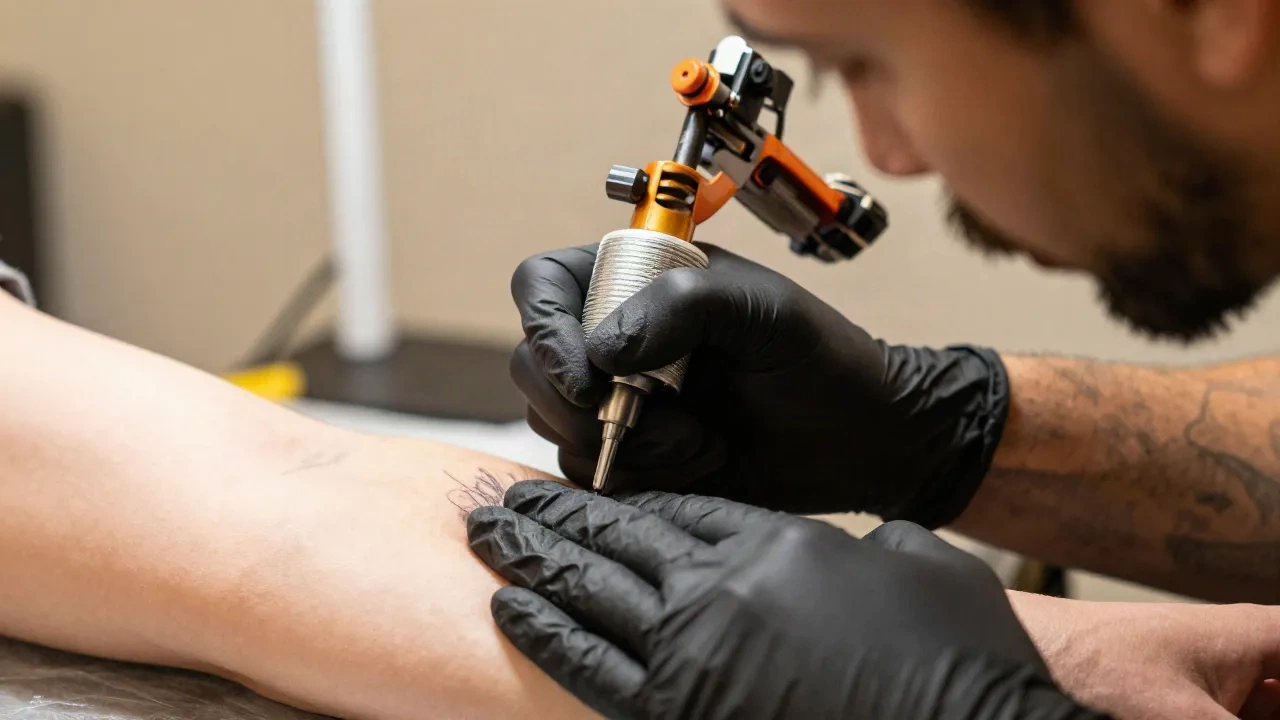
How much do tattoos cost? Most in the US land between $100 and $2,000, and your quote comes from three things: the artist's hourly rate, how many hours your design takes, and the shop minimum. A palm-sized piece from a mid-level artist lands around $300 to $1,000. A full sleeve from a senior artist can pass $6,000. Here is how to work out where your tattoo falls before you walk in.
What does a tattoo actually cost, by size?
Size is the fastest way to get a ballpark. These are working ranges from a 2026 pricing guide by a tattoo supply shop, and they match what we see quoted on studio floors. Treat them as a starting map, not a promise.
Tiny (under 1 inch): Shop minimum, $80 to $200, about 15 to 30 minutes
Small (2 to 4 inches): $150 to $400, about 1 to 2 hours
Medium (4 to 6 inches): $300 to $1,000, about 2 to 5 hours
Large single piece (6+ inches): $500 to $2,000, about 4 to 10 hours
Half sleeve: $600 to $5,000, about 8 to 20 hours
Full sleeve: $1,500 to $6,000+, about 20 to 40 hours over several sessions
The spread inside each row is huge. That is not sloppy math. It is the difference between a junior artist doing simple linework and a senior artist doing detailed color realism on the same patch of skin.
How do artists set the price: hourly, flat or day rate?
Three models cover almost every studio.
Hourly. Common for anything that will take more than one sitting. Rates run roughly $80 to $130 for an apprentice or junior, $130 to $250 for a mid-level artist, and $250 to $400 for a senior. Elite names go past $400. In big metros like New York, Los Angeles or Miami, add 20 to 40 percent.
Flat price per piece. Common for small and medium designs. The artist estimates the hours, multiplies by their rate, and quotes you one number. Good for you: no surprise if the session runs long. Fair for them: the quote already has a buffer.
Day rate. For big work. Expect $800 to $2,000 for a 6 to 8 hour day. You pay for the day, whatever part of the design gets finished.
Concrete tip: ask which model the artist uses before you book. If the answer is hourly, ask for their best estimate of total hours. A good tattooer can give you a range in under a minute.
What is the shop minimum, and why does your tiny tattoo still cost $100?
Every tattoo, even a dot, needs the same setup: a clean station, fresh needles, wraps, gloves, stencil, and cleanup afterward. That is the shop minimum. Most land between $80 and $200, and the high end shows up in big cities.
So a one-word wrist tattoo that takes 15 minutes can cost the same as a 45-minute piece. It is not the time you are paying for. It is the setup, the sterile process and the artist's expertise. That is where it gets awkward for people who expect small to mean cheap.
Skip the shop that offers a $30 walk-in on a tiny piece with no talk of sterilization. That price is not a deal. It is a flag.
Which factors move the price most?
Roughly in this order:
The artist. Experience and demand matter more than anything else. A senior artist with a six-month wait list charges what the wait list allows.
Size and detail. Fine detail takes more passes. A palm-sized portrait costs more than a palm-sized bold anchor.
Style. Bold traditional is fast. Black and grey realism and color realism are the slow ones. A medium color realism piece can run 4 to 5 hours against about 2 for a medium black and grey design.
Placement. Outer upper arm, outer thigh, upper back and calf are easy, flat canvases. Ribs, hands, feet, neck and face are harder to work on and cost more.
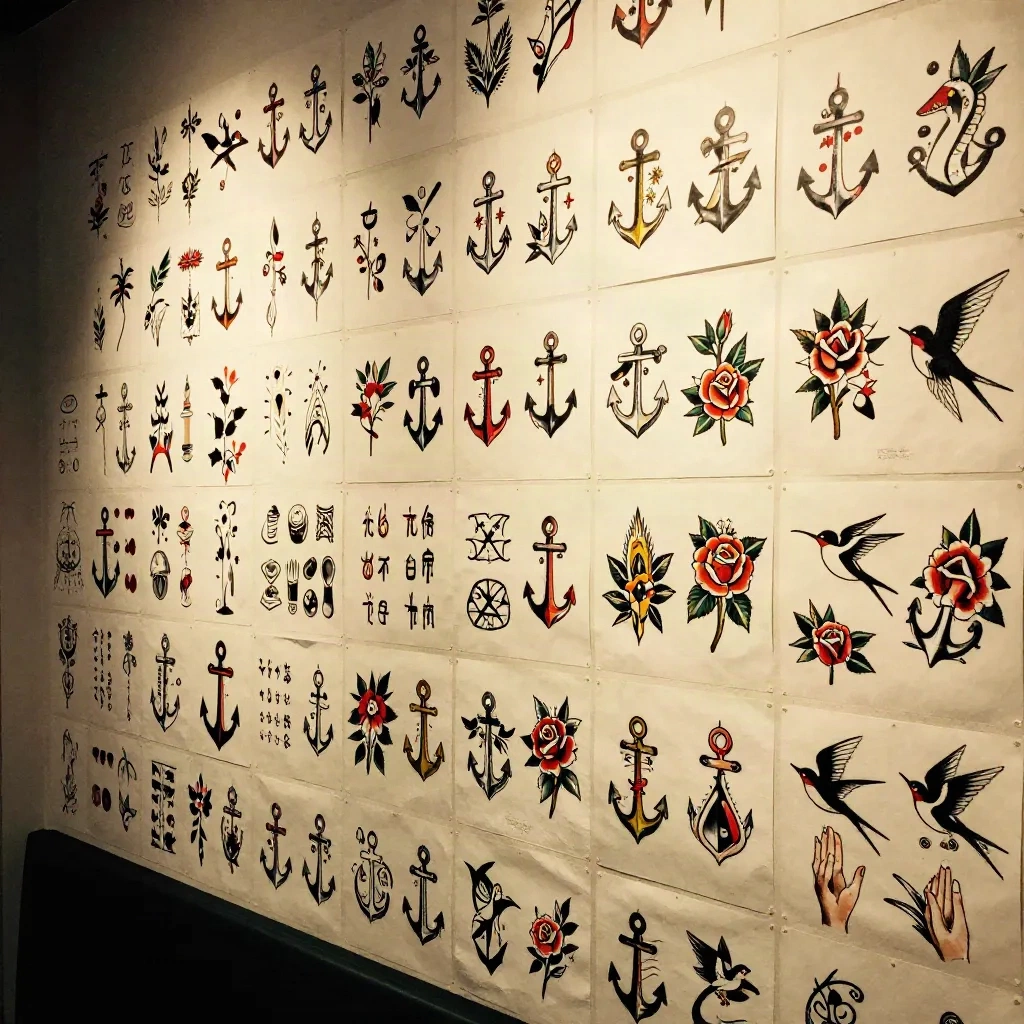
Custom or flash. A drawn-from-scratch design adds consultation and revision time. A planche flash from the wall is usually cheaper because the drawing already exists.
Location. Studio rent shows up in your quote.
Is color more expensive than black and grey?
Often, yes, but not because ink costs more. Color takes longer: more layers, more packing, more passes to get saturation to hold. Simple color in a bold style (neo-trad, traditional) is close to black work. Detailed color realism is the priciest category in most studios.
Same logic for fineline. It looks small and delicate, but fineline demands steady hands and slow passes. Do not assume tiny equals cheap.
What about cover-ups, touch-ups and removal?
This is where budgets break.
Cover-ups usually cost 1.5 to 2 times a fresh tattoo of the same size, because the artist has to design around what is already there, and the new piece usually has to be bigger and darker.
Touch-ups. Many artists include a free touch-up in the first few months. Ask before booking. A touch-up after a year or two is usually charged at a small flat fee or the shop minimum.
Removal. Laser removal runs about $200 to $500 per session and typically needs 6 to 12 sessions. A badly done forearm piece can cost $3,000 to $5,000 to remove. That number is the best argument for paying a decent artist the first time.
What do three real-world budgets look like?
Numbers get clearer with examples. These are built from the ranges above, so your quote will differ, but the logic holds.
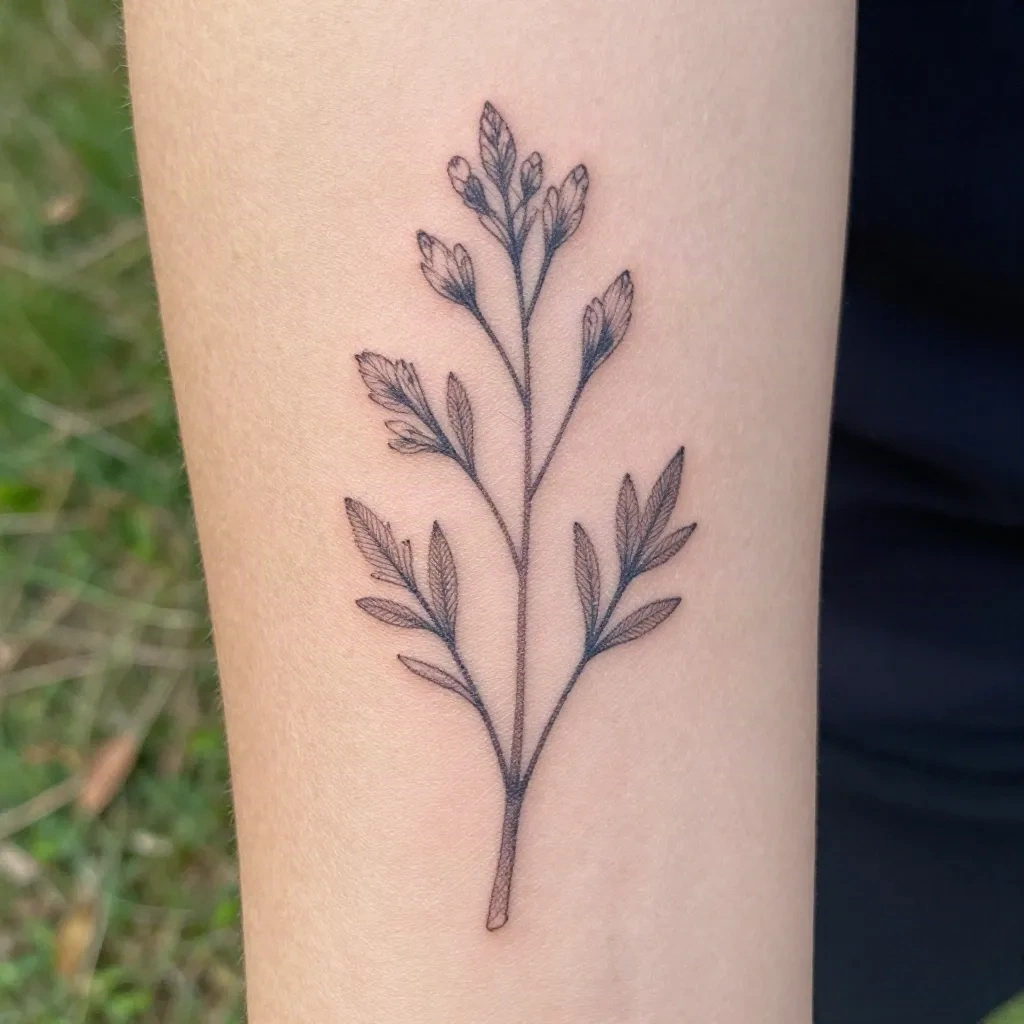
A small fineline sprig on the inner forearm, about 3 inches. A mid-level artist at $150 per hour needs around 1.5 hours. Quote: $225 to $300. Add a 20 percent tip and aftercare and you are near $320 to $400.
A neo-trad rose on the outer calf, about 6 inches, color. Bold lines and saturated fills take roughly 4 hours at $180 per hour. Quote: $700 to $800. Tip included, plan on $850 to $950. Neo-trad is quick for its size because the style is built on clear, confident lines.
A half sleeve of black and grey realism from a senior artist. At $300 per hour and 14 to 18 hours, you are at $4,200 to $5,400, split over three or four sessions. Add a tip and the total sits north of $5,000. This is a save-up project, not an impulse booking.
Same arm, three different budgets. The skin did not change. The hours and the hands did.
Does where you live change the price?
Yes, a lot. Metro studios run 20 to 40 percent above the national baseline, while smaller towns and rural shops run 10 to 30 percent below it. Outside the US, rates follow local wages and studio rent, so a quote in London, Berlin or Sydney will not map neatly onto dollar ranges. Convert the artist's hourly rate, not the final price, and compare like with like.
Traveling for a cheaper tattoo rarely pays off once you count flights and a hotel. Traveling for a specific artist whose work you love is a different decision, and a fair one.
Do you have to tip, and how much?
In US studios, yes, it is the norm. Inked Magazine says most artists agree 15 percent is an appropriate minimum with 20 percent being the norm. Tip on the full price of the tattoo, including small ones. On a $200 piece, that is $30 to $40. Cash is easiest, because many artists prefer it.
Budget the tip from day one. A $600 tattoo is really a $720 tattoo.
What about deposits and hidden costs?
Deposits are normal. Expect $50 to $200 up front for small to medium work, more for big projects. The deposit usually comes off your final price, and most studios do not refund it if you cancel late or skip.
Other costs people forget:
Aftercare: a gentle fragrance-free wash and a thin moisturizer, about $15 to $30.
Sunscreen for the healed tattoo, forever.
Travel, if your artist is in another city.
Extra sessions, if a large piece gets split.
How do you get a real quote before booking?
A vague message gets a vague number. Send the artist four things:
A reference image or rough sketch.
The size in inches or centimeters, and the body part.
Black and grey or color.
Whether you want flash or a custom drawing.
This is where a visual brief helps. If you can show the artist what you want, they can estimate hours in minutes instead of three messages. Inke generates flash-style variants and lets you try them on a photo of your own body, so you walk into the consult with something concrete. Be clear about what it does: it gives you a sharper brief, it does not set the price and it does not replace the artist. You still need a human with a needle to finish the job.
If you want to compare how other tools handle the brief and try-on step, these are the ones we would look at first.
Can you lower the price without cheaping out?
Yes, and without picking a worse artist.
Go smaller or simpler, not cheaper. A bold, clean small design from a good artist beats a complex design from a bad one.
Choose flash. Planche flash designs skip the custom design time.
Pick an easy placement. Outer arm or calf is quicker than ribs.
Split big work. Sessions across months spread out the cost, and your skin heals between them.
Look for apprentice or junior slots at reputable shops, where the work is supervised. Ask to see healed examples first.
Do not haggle. Asking whether there is any flexibility on the design is fine. Asking the artist to drop their rate is not, and it usually costs you the booking.
So, what should you actually budget?
Pick your size, multiply the artist's hourly rate by their estimated hours, then add 20 percent for the tip and about $30 for aftercare. If the total makes you flinch, change the design, not the artist's skill level. If your tattoo is small and simple, plan on $150 to $400 all in. If it is a forearm piece with detail, $800 to $1,500 is realistic. If you are going for a sleeve, start saving now.